I noticed something yesterday that recruit and Staffing professionals can’t afford to ignore. ChatGPT just hit 150 million weekly active users – a 5% jump in just one week. But the real story isn’t about OpenAI’s growth; it’s about what this accelerating AI adoption means for your recruitment marketing strategy.
This isn’t random growth. The surge came specifically from users flocking to try ChatGPT’s new image generation capabilities. People are creating Studio Ghibli-inspired art in seconds, straining OpenAI’s servers in the process.
Why should you care?
Because it signals a fundamental shift in how people are interacting with AI – from passive consumption to active creation. And most recruitment agencies are completely unprepared for what this means.
The Generative AI Explosion
I’ve been in this industry long enough to witness several technological transitions. I watched the yellow pages become obsolete as the internet took over. Now I’m watching traditional recruitment marketing approaches fade as AI CRM’s with AI agents reshapes everything.
The numbers tell the story. Global app downloads for ChatGPT jumped 11% while in-app subscription revenue climbed 6%. People aren’t just trying AI – they’re paying for it. They’re integrating it into their workflows. They’re becoming dependent on it.
Your candidates and clients are among them.
When I started implementing AI tools in real-world sales and recruitment roles, I immediately saw how they enhanced client qualification and candidate screening efficiency. The manual workload dropped. Selection accuracy improved. But that was just the beginning.
The New Recruitment Marketing Reality
The recruitment agencies thriving today are the ones that understand a crucial truth: AI isn’t just another tool – it’s becoming the central nervous system of effective recruitment marketing.
Consider what’s happening with ChatGPT’s image generation capability. Users can now create visual content that would have required a designer just weeks ago. This same pattern is playing out across the recruitment marketing landscape.
Job descriptions, candidate outreach, market analysis – these traditional recruitment marketing tasks are being transformed by generative AI tools. The agencies that embrace this shift gain an exponential advantage.
I’ve seen firsthand how properly implemented AI in recruitment can transform a recruiting firm’s marketing capabilities:
Candidate engagement increases when outreach is personalized at scale. Market positioning improves with data-driven content strategy. Talent acquisition accelerates through predictive analytics and automated nurturing.
The Hybrid Approach That Actually Works
The most successful implementation I’ve witnessed comes from what I call the Hybrid AI Workforce Approach – merging human intuition with AI capabilities.
This isn’t about replacing recruiters. It’s about empowering them.
When I developed our comprehensive Sales and Recruitment Engine Framework, I specifically designed it to address the challenges of today’s cutthroat sales environment and persistent talent shortages. The key was optimizing each stage of the recruitment process through strategic AI in recruitment implementation.
The agencies seeing the greatest returns aren’t just bolting on generic AI tools. They’re integrating purpose-built AI agents directly into their CRM and business workflows. These aren’t chatbots – they’re intelligent, task-specific digital workers trained to qualify leads, schedule appointments, and drive deals through your sales funnel.
Some recruitment marketing functions can be fully automated. Others require that critical human touch. Understanding which is which makes all the difference.
What This Means For Your Agency
The surge in ChatGPT usage represents a broader trend that recruitment agencies can’t ignore. AI adoption isn’t slowing – it’s accelerating. The competitive gap between AI-Powered Staffing agencies and traditional operations is widening daily.
But there’s good news.
You don’t need massive resources to implement effective AI in your recruitment marketing. Small and mid-sized agencies actually have an advantage in agility and speed of adoption.
Start by identifying your most time-consuming, repetitive marketing tasks. These are prime candidates for AI recruitment automation. Then look at your highest-value creative work that could benefit from AI augmentation rather than replacement.
The legal questions around AI-generated content that the article mentions – particularly around copyright – are legitimate concerns. But they shouldn’t prevent forward-thinking implementation. Focus on augmenting your team’s capabilities rather than simply generating content without oversight.
Moving Forward
Every major technological shift creates winners and losers in our industry. I watched it happen when the internet transformed recruitment. I’m watching it happen again with AI.
The 150 million weekly ChatGPT users represent more than just a statistic. They reveal how quickly AI is becoming integrated into everyday workflows. Your clients and candidates are among those users, and their expectations are evolving accordingly.
The question isn’t whether AI will transform recruitment marketing. It’s whether your agency will be among those leading the transformation or scrambling to catch up.
The agencies that thrive will be those that develop a clear AI strategy aligned with their business goals, curate the right tech stack without unnecessary fluff, integrate AI capabilities directly into existing infrastructure, and follow clear execution playbooks that track ROI.
The time for tentative experimentation has passed. The 150 million weekly ChatGPT users have spoken. AI is here, it’s growing, and it’s changing recruitment marketing forever.
I’ve been watching the AI revolution transform business for years now, but a recent study from Carnegie Mellon and Microsoft has confirmed something I’ve suspected all along: our increasing reliance on AI might be compromising our ability to think critically.
As someone who has built a business around integrating AI into recruitment and sales processes, this research hit close to home. It found that people who trust AI systems tend to engage less critically with the outputs these systems generate. They essentially outsource their thinking to the algorithm.
This shift isn’t subtle. The researchers observed a fundamental change from task execution to mere oversight when people use generative AI. Efficiency improves, but at what cost?
The Hidden Danger Behind AI Efficiency
The study revealed something fascinating. People who were more skeptical of AI actually demonstrated better critical thinking skills when reviewing AI outputs. Their skepticism triggered deeper cognitive engagement.
This matters enormously in recruitment and sales.
When a sales person or recruiter accepts an AI-generated customer or candidate assessment without question, they’re not exercising the judgment that makes human valuable in the first place. They’re becoming operators rather than thinkers.
I’ve seen this happen firsthand. Teams get so comfortable with AI handling candidate screening that they stop questioning the parameters and assumptions built into the system. The initial efficiency gain eventually leads to intellectual complacency.
The Cognitive Offloading Problem
What we’re experiencing is cognitive offloading on an unprecedented scale. We’ve always used technology to extend our capabilities, but generative AI doesn’t just extend our thinking—it can gradually replace it if we’re not careful.
Consider what happens when you rely completely on GPS. Your natural navigation skills deteriorate. The same principle applies with AI in professional settings. When the machine thinks for you, those mental muscles atrophy.
For recruiters, this could mean diminished ability to spot nuances in customer or candidate potential, reduced capability to connect disparate skills to organizational needs, and weakened instincts about cultural fit.
The Hybrid AI Workforce Solution
After years of implementing AI in sales and recruitment settings, I’ve developed an approach that preserves critical thinking while capturing efficiency gains—what we call the Hybrid AI Workforce model.
This isn’t just theoretical. It’s the cornerstone of how we structure AI implementation at AI Powered Staffing.
The key principle is straightforward: AI should handle tasks, not decisions. When we implement AI Agent Teams for our clients, we deliberately design interaction points that require human critical assessment.
For example, our AI can efficiently screen resumes against job requirements, but the human recruiter must then critically evaluate the AI’s reasoning before moving candidates forward. This creates a crucial checkpoint for human judgment.
Building Critical Thinking Into AI Workflows
The beauty of this approach is that it turns AI into a critical thinking enhancer rather than a replacement. Here’s how we structure it:
First, we identify which sales and recruitment tasks benefit from AI automation. Typically these include initial screening, basic sales and candidate communications, and sales call or interview scheduling.
Next, we deliberately design “cognitive checkpoints” where human sales and recruiters must engage with the AI’s reasoning, not just its conclusions. This forces critical evaluation rather than passive acceptance.
Finally, we implement feedback loops where human insights improve the AI, creating a virtuous cycle where human critical thinking constantly refines the system.
This approach maintains the efficiency benefits of AI while actively preserving and even enhancing human critical thinking skills.
The Future Belongs to Balanced Implementation
The Carnegie Mellon/Microsoft research should serve as a warning, not a deterrent. AI in recruitment and sales isn’t going away—nor should it. The efficiency gains are too valuable to abandon.
The recruitment firms that will thrive in this new environment are those that implement AI with intentional balance. They’ll use AI to handle the mundane while ensuring their human team members continue exercising their unique cognitive abilities.
This is why I’m so passionate about our Fractional Chief AI Officer service. We don’t just drop AI tools into existing workflows and hope for the best. We architect systems that intentionally preserve human critical thinking while capturing AI efficiency.
The research is clear: passive reliance on AI weakens critical thinking. But with thoughtful implementation, AI becomes not just a productivity tool but a catalyst for better human decision-making in recruitment.
I watched my yellow pages sales career vanish when the internet arrived. Now, I’m seeing the exact same pattern unfold in staffing and recruiting sales – but at five times the speed.
The signs are everywhere. Small and regional recruiting firms with AI-enhanced sales teams are outperforming larger agencies relying solely on human effort. The math is becoming undeniable.
While most of the industry debates whether to dip their toes into AI, the early adopters I work with are already seeing 3-5x output from their sales teams without adding headcount. This isn’t theoretical – it’s happening right now.
Why Traditional Sales Is Dying
Let’s face it. The traditional sales model is fundamentally broken.
Your sales people spend hours each day on low-value activities: manual data entry, repetitive follow-ups, and endless email management. They’re drowning in administrative work instead of building relationships with clients and candidates.
I remember walking into a staffing firm last year and watching their top biller spend nearly 70% of her day on tasks that had nothing to do with actual selling or recruiting. When I pointed this out, her response was telling: “That’s just how it is.”
But that’s not how it has to be.
What AI Sales Agents Actually Do
The game-changer isn’t chatbots or generic AI tools. It’s purpose-built AI sales agents integrated directly into your CRM and business workflows.
These aren’t futuristic concepts. They’re operational today.
I’ve watched AI sales agents qualify leads, schedule appointments, personalize outreach, and nurture relationships – all without a human lifting a finger. When properly trained on your sales process, they operate 24/7 with superhuman consistency.
One mid-sized staffing firm we work with has AI agents that conduct the first three touches with every inbound lead. Only qualified opportunities ever reach a human salesperson. Their team now focuses exclusively on high-value conversations while their pipeline has grown by 340%.
The Hybrid Workforce Model
The most successful implementations aren’t about replacing humans – they’re about strategic collaboration between AI and your team.
I call this the Hybrid AI Workforce model. It’s not about eliminating jobs; it’s about eliminating the soul-crushing parts of jobs that drive burnout and turnover.
When I first started experimenting with this approach, I was skeptical. Could AI really handle the nuanced communication needed in sales?
What I discovered surprised me. AI excels at consistency, persistence, and data-driven decision making – precisely where human salespeople typically struggle. Meanwhile, humans still dominate at building deep relationships, handling complex objections, and closing deals.
The magic happens when you combine both strengths.
What This Means For Your Recruiting Firm
The implications are profound, especially for small and mid-sized firms.
For the first time, you can compete with larger agencies without matching their headcount. Your team of 10 can operate with the output capacity of 30-50 through strategic AI sales deployment.
But there’s a closing window of opportunity. The competitive advantage is strongest for early adopters.
I’ve seen firms implement properly configured AI sales agents and experience immediate results:
– Sales cycles shortened by 40-60% – Lead response times reduced from hours to seconds – Follow-up consistency approaching 100% – Sales team capacity expanded by 3-5x without adding headcount
And the firms seeing these results aren’t tech giants. They’re regional staffing companies with 5-50 employees who simply made the decision to move while their competitors deliberated.
The Hard Truth About Implementation
Despite the compelling case, most staffing firms will fail at AI sales implementation. Not because the technology isn’t ready, but because they approach it incorrectly.
The biggest mistake I see is treating AI as a technology project rather than a strategic business initiative. Downloading ChatGPT and expecting magic is like buying a treadmill and expecting to wake up fit.
Successful implementation requires:
1. A clear understanding of your existing sales process 2. Strategic decisions about which parts to automate versus augment 3. Proper integration with your sales data 4. Continuous optimization based on performance data
This is precisely why we developed the Fractional Chief AI Officer service. Most staffing firms need strategic guidance, not just tools.
The Question Isn’t If, But When
I’ve been in this industry long enough to recognize inflection points. This is one of them.
The firms that deploy AI sales agents effectively in the next 12-18 months will create an advantage that latecomers may never overcome. Their cost of customer acquisition will be lower. Their speed to market will be faster. Their sales teams will be happier and more productive.
Those who wait for perfect clarity before acting will find themselves in the same position as yellow pages salespeople in 2005 – watching their business model evaporate as the world moves on.
The most successful leaders I work with aren’t asking whether to adopt AI in their sales function. They’re asking how quickly they can implement it while their competitors remain stuck in deliberation.
The question isn’t whether AI will transform your sales operations.
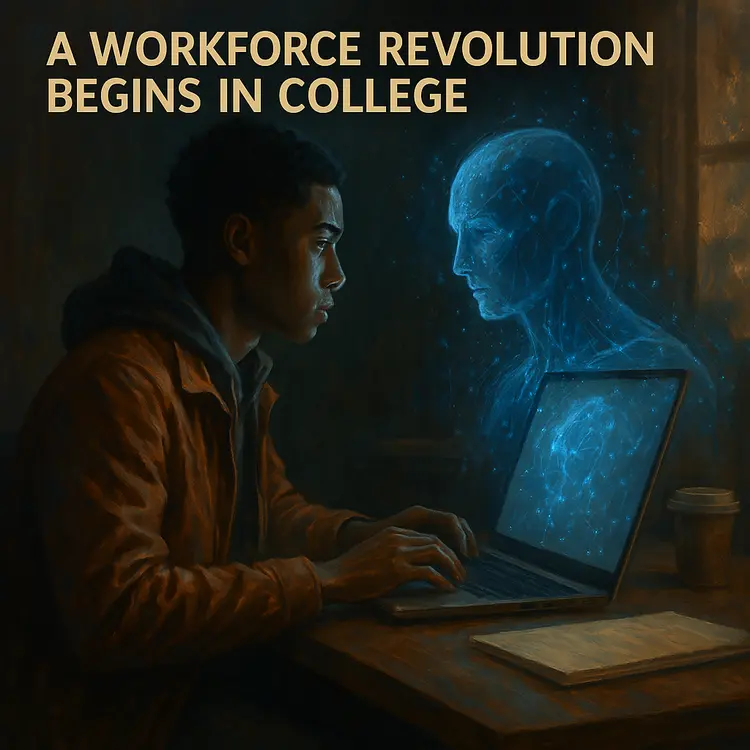
I’ve watched AI transform recruiting for years now, but OpenAI’s latest move feels different. Their decision to offer ChatGPT Plus free to college students until May 2025 isn’t just another tech giveaway. It’s the beginning of a workforce revolution that will fundamentally reshape how we recruit, hire, and work.
The strategy is brilliant. By giving students access to premium features like GPT-4o, voice interaction, and image generation, OpenAI isn’t just being generous. They’re creating an entire generation of professionals who will graduate expecting advanced AI tools in every aspect of their careers.
I saw this pattern before. When I started in recruiting after my sales and marketing days, CRM systems were optional. Then suddenly, they weren’t. Companies that failed to adopt them quickly became dinosaurs. AI is following the same trajectory, but at hyperspeed.
The Literacy Gap Is About To Close
For years, I’ve helped staffing and recruiting firms implement AI solutions. The biggest obstacle has never been the technology itself but the comfort level of users. OpenAI just eliminated that barrier for an entire generation.
Think about it. College students using GPT-4o to draft emails, analyze research papers, prepare presentations, and navigate complex concepts won’t just become comfortable with AI.
They’ll become fluent.
When these students graduate, they won’t ask if your recruiting firm uses AI tools. They’ll ask which ones. And if your answer is “none” or “basic,” you’ll instantly seem outdated.
This creates an urgent need for what we call the Hybrid AI Workforce model – where AI and human capabilities merge to create something greater than either could achieve alone. Staffing and recruiting firms that don’t adopt this model will struggle to connect with the next generation of talent.
Preparing For The AI-Native Candidate
I’ve implemented AI tools in real-world recruitment settings for years now. The difference between today’s professionals gradually adapting to AI and tomorrow’s graduates who’ve never known work without it will be stark.
These AI-native professionals will:
Evaluate potential employers based on their AI sophistication. They’ll judge your candidate experience against their experiences with advanced AI tools in college.
Approach problem-solving differently, leveraging AI as naturally as previous generations used calculators or spreadsheets.
Expect AI-enhanced communication throughout the recruitment process, from initial outreach to onboarding.
Working with hundreds of staffing and recruiting firms, I’ve noticed those who thrive aren’t necessarily the ones with the biggest budgets. They’re the ones who adapt fastest. OpenAI’s student strategy accelerates the timeline for that adaptation.
The Future Belongs To Hybrid Workforces
The converging forces of AI-trained graduates and increasingly sophisticated AI tools point to one conclusion: the future belongs to hybrid AI workforces where human intuition and AI capabilities complement each other.
For recruiting firms, this means:
Integrating AI into your workflow isn’t optional – it’s existential. The gap between AI-enabled firms and traditional operations will widen dramatically as AI-fluent candidates enter the workforce.
Training your current team on AI tools isn’t just about productivity. It’s about speaking the same language as your future clients and candidates.
Developing a Hybrid AI Workforce strategy now gives you time to experiment, learn, and optimize before the wave of AI-native graduates hits the market.
When I first explored AI and automation as solutions to recruitment challenges, many viewed it as experimental. Today, it’s becoming standard. Tomorrow, it will be the baseline expectation.
The Strategic Move For Recruiting Firms
OpenAI’s strategy reveals the playbook for forward-thinking recruiting firms. By giving students free access, they’re building loyalty that will translate into workplace advocacy. Smart recruiting firms should follow suit.
Start building your AI capabilities now. Focus on creating systems where AI handles repetitive tasks while your human team focuses on relationship building and strategic thinking.
Document your AI implementation journey. When AI-native candidates ask about your technological sophistication, you’ll have concrete examples of how you’ve embraced these tools.
Develop expertise in matching AI-savvy candidates with employers ready for their skills. This specialization will become increasingly valuable as the talent market evolves.
I’ve seen firsthand how AI can transform recruitment when implemented thoughtfully. The firms that thrive won’t be those who resist change or adopt AI haphazardly. They’ll be the ones who develop comprehensive strategies for integrating human and artificial intelligence.
OpenAI’s student initiative isn’t just about giving free tools to cash-strapped college kids. It’s about reshaping expectations for an entire generation of professionals. For recruiting firms, the message is clear: adapt to the hybrid AI workforce model now, or risk becoming irrelevant to tomorrow’s talent.
The challenge is real. But so is the opportunity. The question isn’t whether AI will transform recruiting – it’s whether your firm will lead that transformation or be left behind.
AI tools transform. Humans adapt. Recruitment thrives.
The recruiting and staffing industry stands at a pivotal crossroads. Traditional methods that once defined our profession now struggle to keep pace with market demands. The integration of artificial intelligence isn’t merely an option anymore – it’s becoming the differentiator between agencies that scale and those that stagnate.
What’s fascinating about this shift isn’t the technology itself but how it redefines the human element in recruitment. AI doesn’t replace recruiters; it elevates them from administrative processors to strategic talent advisors. This transformation requires a fundamental rethinking of skills, processes, and value propositions.
The most successful staffing firms today are adopting a hybrid approach. They leverage AI for candidate screening, engagement automation, and predictive analytics while focusing human expertise on relationship building, cultural assessment, and strategic consultation. This balance creates a powerful synergy that neither humans nor AI could achieve independently.
Data now shows that agencies implementing AI-driven recruitment processes see up to 3x improvement in candidate matching accuracy and significant reductions in time-to-hire. But the technology alone isn’t enough. The critical factor is how organizations integrate these tools into their existing workflows and upskill their teams to leverage AI insights effectively.
Looking forward, the recruitment industry won’t be divided between AI adopters and non-adopters. The distinction will be between those who use AI strategically to enhance human capabilities versus those who implement technology without reimagining their core processes.
For staffing professionals navigating this transition, the focus should be on developing complementary skills that AI cannot replicate: emotional intelligence, strategic thinking, and consultative selling. The future belongs to recruiters who can interpret AI insights and translate them into meaningful business outcomes for clients and candidates alike.
The AI revolution in recruitment isn’t about replacing humans. It’s about creating a new paradigm where technology handles the routine while humans deliver unprecedented value through judgment, intuition, and relationship building. This is the next evolution of our industry, and it’s happening now.
Talent finds new paths. The recruitment industry stands at a crossroads unlike any we’ve seen before. Artificial intelligence isn’t just another tool in our arsenal – it’s fundamentally reshaping how we connect talent with opportunity.
Having witnessed the evolution of recruitment firsthand, I’ve observed persistent inefficiencies that plague traditional hiring processes. Manual screening consumes countless hours. Candidate engagement falters. Sales cycles stretch too long. These challenges aren’t new, but our ability to solve them has dramatically advanced.
The transformation begins with understanding that AI serves as more than automation. It functions as an intelligent partner across your entire operation. When properly implemented, AI enhances human capabilities rather than replacing them, creating what I call a Hybrid AI Workforce.
The Four Pillars of AI Recruitment Transformation
Successful implementation requires focus on four core business functions. First, sales acceleration through AI qualification and engagement tools that identify promising clients before your competitors. Second, marketing automation that delivers personalized outreach at scale without sacrificing authenticity. Third, candidate sourcing and screening that finds hidden talent while eliminating bias. Fourth, support systems that maintain relationships through intelligent, contextual communication.
What makes this approach powerful isn’t each component in isolation. The magic happens at their intersection.
Consider what happens when your AI recruitment system identifies a qualified candidate and simultaneously alerts your sales team to a client with matching needs. This coordination creates opportunity that manual processes simply cannot match in speed or precision.
Leveling the Playing Field
Small and mid-sized staffing firms traditionally operate at a disadvantage against corporate giants with massive resources. AI fundamentally changes this equation. The technology allows boutique operations to deliver enterprise-level service without enterprise-level headcount.
One regional staffing firm implemented our CRM-integrated AI Agent Teams and saw their candidate screening capacity triple while reducing time-to-placement by 40%. Their team size remained unchanged, but their capabilities expanded dramatically.
This isn’t theoretical potential. It’s practical application delivering measurable results.
Building Your AI Recruitment Strategy
Start by examining your current workflow. Where do your recruiters spend most of their time? Which tasks require human judgment and which could benefit from automation? The answers create your roadmap.
Avoid the common mistake of implementing disconnected tools. An integrated approach connecting your CRM with purpose-built AI agents delivers exponentially better results than standalone solutions.
Remember that implementation succeeds through strategic planning rather than technological sophistication. The best technology applied without clear business objectives creates impressive demonstrations but disappointing outcomes.
The staffing and recruitment industry stands at the beginning of its most significant transformation. Those who embrace AI strategically will thrive. Those who wait will struggle to catch up.
Your competitive advantage awaits not in some distant future but in decisions you make today about how technology augments your team’s capabilities. The question isn’t whether AI will transform recruitment, but whether you’ll lead that transformation or follow others who do.
In the contemporary job market’s competitive landscape, the ability to attract and retain top talent stands as a crucial success factor. This is especially true in the staffing industry, which acts as a vital bridge connecting diverse professionals with a myriad of roles across various sectors. The challenge for staffing agencies is not only to find the right candidates but also to enhance their experience through the recruitment process. This article delves into the transformative role of data-driven recruiting in the staffing industry, offering insights into how it benefits both job seekers and recruiters. Prepare to reimagine your hiring process with the power of data!
Key Takeaways:
Prioritizing candidate experience is fundamental in successful staffing, impacting employer branding and reducing instances of candidate drop-offs and disengagement.
Leveraging data-driven strategies can streamline and refine hiring processes, leading to more predictable and consistent outcomes in staffing.
A case study exemplifies how a mid-sized staffing firm effectively transformed its recruitment approach through data-driven methods, resulting in a marked improvement in candidate satisfaction and the quality of placements.
The Importance of Candidate Experience in Staffing Amidst Talent Shortages
In the staffing industry, the recruitment process is often the first point of contact between a candidate and a staffing agency, setting the tone for their perception and decision-making. A seamless candidate experience is vital in enhancing employer branding, reputation, and productivity, and it can significantly reduce the number of incomplete applications – all of which are critical for attracting job seekers in today’s competitive market.
Improving the candidate journey is key to successful staffing. It leaves a lasting impression that fosters word-of-mouth promotion and bolsters the agency’s reputation across various industries.
Employer Branding and Reputation
The branding and reputation of your staffing agency are instrumental in attracting diverse talent. Engaging with potential candidates through social media and creating content that reflects your agency’s culture are effective ways to build a strong employer brand. Additionally, actively managing your online presence and responding to feedback is essential to maintain a positive image in the job market.
Simplifying the Application Process
A streamlined application process is crucial, particularly during talent shortages. Best practices include:
Providing clear instructions and guidance.
Gathering candidate feedback.
Prompt follow-up with applicants.
Utilizing technology to automate and simplify processes, allowing your team to focus on higher-value tasks.
These practices enhance candidate satisfaction, minimize issues like ghosting, and increase recruitment efficiency through data utilization.
Minimizing Ghosting and Incomplete Applications
Ghosting is a prevalent challenge in recruitment. To tackle this, AI-Powered Staffing employs journey mapping, tracking each application and pinpointing areas where candidates drop off. This insight allows staffing agencies to refine their processes for a smoother application experience. Automation with decision logic can personalize interactions based on applicant behavior, send reminders for incomplete applications, and offer assistance as needed.
Responsive Talent Acquisition
The speed of response post-application submission is crucial. Engaging with candidates promptly can significantly increase the chances of advancing the recruitment process. Data shows that responding within 15 minutes makes it six times more likely to connect with candidates and initiate recruitment.
Staffing agencies using AI-Powered Staffing can leverage systems to maintain a database of past applicants, ensuring they keep track of high-potential candidates for future roles and maintain engagement throughout the recruitment process. By creating a candidate funnel, agencies are well-prepared with viable candidates for new job opportunities as they arise.
Data-Driven Strategies for Enhancing Candidate Experience in Staffing
The implementation of data-driven strategies is transformative in enhancing candidate experience and streamlining the staffing process. Utilizing strategies such as crafting impactful job ads, optimizing application procedures, and personalizing interview schedules is pivotal in a data-centric approach.
Leveraging accurate data and analytics, data-driven staffing supports objective candidate selection and establishes a legally defendable recruitment process. AI-Powered Staffing employs a software named Hire Up Funnels, featuring built-in analytics to measure, track, and optimize recruitment cycles. This data is displayed on a daily dashboard, enabling companies to make informed decisions.
Crafting Compelling Job Ads for Diverse Roles
Creating job ads that resonate with a diverse range of candidates is crucial in the staffing industry. AI-Powered Staffing utilizes employer brand messaging based on psychological principles, allowing companies to craft ads that align with the values, motivations, and preferences of various roles. The focus is on creating ads that speak to candidates on a human level, avoiding technical jargon or generic descriptions. This method not only attracts qualified candidates but also builds a pool of applicants who align with the organization’s ethos, streamlining the hiring process for HR professionals.
Optimizing the Application Process
A seamless application experience is key to attracting top talent. Data-driven insights help identify and rectify inefficiencies, enhancing the likelihood of application completion. Implementing a Hybrid AI hiring system optimizes the application process, automating routine tasks and creating customized actions based on specific conditions, thus allowing HR teams to focus on more strategic aspects.
Personalizing Interview Scheduling and Communication
Tailoring interview schedules and communication underscores a commitment to valuing candidates. Automating scheduling and employing an omnichannel communication system facilitates effective interactions between recruiters and candidates. This ensures accurate tracking of communication and keeps candidates informed about their application status. It also ensures adherence to best practices throughout the recruitment process, minimizing the chances of candidates falling through the cracks. This level of customization and efficiency not only enhances the candidate experience but also streamlines the selection process, benefitting both recruiters and candidates.
Measuring Candidate Experience in Staffing with AI-Powered Staffing
To continuously enhance the hiring process in the staffing industry, it’s vital to measure candidate experience using various methods. These include identifying bottlenecks, implementing omnichannel communication, utilizing a built-in accountability co-pilot, and tracking key performance indicators (KPIs). Leveraging data insights is crucial for pinpointing improvement areas and making informed decisions.
Removing Bottlenecks and Frictions
Addressing bottlenecks in the staffing process can significantly improve application experiences and expedite hiring decisions. Analyzing data such as applicant feedback, time to hire, and drop-off rates is essential for identifying inefficiencies. Streamlining processes and enhancing communication are key strategies for:
Eliminating bottlenecks.
Improving candidate experience.
Accelerating hiring decisions.
Boosting overall efficiency.
Omnichannel Communication with Automation Technologies
In staffing, omnichannel communication allows candidates to interact with recruiters through various platforms like email, text, phone, social media, and pixel retargeting. This ensures candidates receive timely updates and can easily communicate with the recruitment team, enhancing their experience and building trust. AI-Powered Staffing utilizes pixel retargeting to re-engage candidates who have abandoned applications, increasing the chances of conversion.
Implementing omnichannel communication involves:
Offering multiple contact channels for candidates.
Ensuring these channels are user-friendly.
Guaranteeing timely responses from the recruitment team.
An accountability co-pilot ensures quick follow-up and maintains efficiency in the staffing process. It sets clear expectations for recruiters regarding timely communication and feedback to applicants. This system automatically tracks progress and reminds recruiters to engage with applicants, and alerts management if guidelines are not followed, allowing for immediate corrective action.
The AI-Powered Staffing co-pilot proactively manages recruitment, ensuring that if a candidate is not contacted promptly, reminders are sent to recruiters. Repeated delays trigger notifications to management, safeguarding against potential candidate loss and demonstrating respect for applicants’ time.
Tracking KPIs
Monitoring KPIs related to the candidate journey is essential for identifying areas of improvement and evaluating the success of changes. Key indicators like time to hire, candidate satisfaction, and application drop-off rates provide valuable insights. Tracking these metrics helps organizations understand the effectiveness of their hiring process and guides them in optimizing for better results.
Implementing Changes in Staffing Based on Data Insights with AI-Powered Staffing
In the staffing industry, implementing changes based on data insights is crucial for addressing bottlenecks, fostering a culture of continuous improvement, and creating predictable, repeatable results through automation and system integration.
Using data-driven decision-making enhances the candidate experience, leads to more successful placements, and streamlines the recruitment process.
Addressing Bottlenecks and Frictions
Identifying and addressing bottlenecks in the staffing process leads to a smoother and more positive experience. Data insights reveal improvement areas, resulting in enhanced candidate experiences and more successful staffing outcomes.
Fostering Continuous Improvement Based on Data Insights
Cultivating a culture of continuous improvement, informed by data, ensures the staffing process constantly evolves to meet both candidate and organizational needs. Using data to identify areas for adjustment advances the candidate experience and optimizes staffing success.
Creating Predictable and Repeatable Results
Employing data-driven decision-making generates predictable and repeatable outcomes, improving hire quality and enhancing the overall candidate journey. It provides insights into recruitment trends, enabling recruiters to make informed decisions.
Case Study: Successful Data-Driven Staffing Transformation
Consider a case study in the staffing industry where a mid-sized agency faced challenges in attracting diverse talent. By adopting AI-Powered Staffing, they transformed their recruitment process, leading to better candidate matching and experience.
The agency utilized data from AI-Powered Staffing to identify and improve weak areas in their recruitment. They focused on sources yielding high-caliber applicants, resulting in a more efficient process. Consequently, the agency experienced improved hire quality and an enhanced candidate experience.
Summary
Data-driven staffing is a potent tool for improving candidate experience and refining recruitment processes. Strategies like crafting impactful job ads, streamlining applications, and employing omnichannel communication significantly elevate the staffing journey. With data insights and a dedication to continual improvement, staffing processes can be revolutionized, benefiting both candidates and the agency. To discover how Hybrid AI can aid your staffing needs, explore AI-Powered Staffing.
Frequently Asked Questions
What is candidate experience in staffing?
Candidate experience in staffing is the perception job seekers have of an agency’s recruitment and onboarding process, including their interactions from application to potential hiring or exit from the process.
What is data-driven staffing?
Data-driven staffing involves using in-depth analytics and recruitment metrics to make informed hiring decisions, improving efficiency, reducing costs, and enhancing recruitment outcomes.
Key factors influencing candidate experience in staffing?
Factors include employer branding, streamlined application processes, and effective communication strategies to minimize candidate drop-offs.
Strategies for optimizing candidate experience using application source data?
Investing in high-quality applicant sources and ensuring data accuracy are crucial. This involves removing any discrepancies in the data and providing a seamless application experience.
Imagine transforming your staffing agency’s hiring process to become more efficient and effective, ultimately improving the quality of candidates you place. Data-driven recruitment, leveraging the power of data and analytics, offers an innovative approach to achieve this goal. This method allows staffing firms to streamline their hiring processes, engage candidates, and make more informed placement decisions, finding the best matches for various roles across multiple industries.
In this article, we’ll explore the concept of data-driven recruitment, its benefits, and effective implementation strategies. We’ll also delve into the importance of identifying relevant metrics, efficient data collection, and utilizing recruitment data to optimize placement processes. Additionally, we’ll tackle the challenges and limitations of this approach and suggest strategies to overcome them.
Key Takeaways
Data-driven recruitment uses data and analytics to enhance the efficiency and effectiveness of staffing processes.
Staffing agencies can identify pertinent metrics, gather and analyze data efficiently, and act on this information to enhance placement success while reducing costs.
Integrating machine learning and AI into staffing processes is crucial for success in this domain, with a focus on continuous adaptation and improvement.
For staffing agencies, relevant metrics might include candidate job success rates, client satisfaction scores, and the efficiency of the placement process.
What Is Data-Driven Recruitment, Anyway?
Data-driven recruitment in the staffing industry involves using data and analytics to refine the talent acquisition process. This could include analyzing historical placement data or client feedback to improve future matches. Key technologies and tools include:
Automated workflow processes and omnichannel communication to streamline candidate engagement.
Employer brand messaging rooted in psychology, enabling candidates to feel valued and understood.
AI-Powered Staffing solutions providing real-time data and insights for continuous improvement.
AI-Powered Staffing, combined with a recruitment and retention strategist as a fractional employee, can revolutionize the staffing process, ensuring a consistent flow and talent pool of qualified candidates.
However, adopting data-driven recruitment strategies comes with challenges. In the staffing industry, this might involve adapting to diverse client needs and rapidly changing job market trends. Effective human resource management is crucial for a productive and efficient hiring process. With AI-Powered Staffing set up for maximum efficiency, and a fractional employee skilled in data interpretation, staffing agencies can refine their hiring strategies for greater effectiveness and client satisfaction.
The Importance of Data-Driven Recruitment in Staffing
Data-driven recruitment is a transformative approach that goes beyond being a mere buzzword. It’s instrumental in improving the quality of hires, streamlining the recruitment process, and talent acquisition team and reducing operational costs. By assessing metrics and refining recruitment channels, staffing agencies can accurately target and attract the most suitable candidates for various positions across multiple industries.
Moreover, data-driven recruitment aids in optimizing websites for mobile use, a crucial aspect given the significant percentage of job seekers using mobile devices for job searches and applications. Treating candidates as customers throughout the recruitment process can help establish trust, convey professionalism, and enhance candidate satisfaction.
Identifying Relevant Metrics
Monitoring recruitment metrics is key to controlling costs and refining recruiting efforts. For staffing agencies, the quality of hire is paramount. Data-driven recruitment enables learning from past placements to enhance future decisions. It’s advisable to consult with senior leaders when determining crucial data for implementing data-driven recruitment strategies.
Important metrics to track include:
Cost per hire
Time to hire
Quality of hire
Employee turnover
Total lifetime value of placements
Focusing on these key performance indicators allows staffing agencies to make data-driven decisions to optimize their recruiting efforts, ultimately fostering a positive company culture, both within the agency and in client organizations.
Efficient Data Collection
Effective data collection is crucial for informed decision-making and recruitment process improvement. This includes sourcing candidates from specialized job boards and collecting data on niche requirements and performance metrics. Automated tools and AI can be utilized for efficient data collection.
The benefits of effective data collection include enhanced decision-making, optimized recruitment processes, more employee referral programs and increased productivity. Accurate and consistent data collection enables staffing agencies to make more informed decisions about talent, improving the overall efficiency of the recruitment process.
Analyzing and Acting on Recruitment Data
Analysis of recruitment data should consider factors like time to hire, cost per hire, and quality of hire. Data can reveal areas for improvement in recruitment strategies and opportunities to streamline processes. Data-driven recruitment empowers staffing agencies to make more effective decisions, reduce recruitment costs further, and enhance the quality of hires.
Techniques such as surveys, interviews, and online applications are useful for acquiring recruitment data. Efficient data collection and analysis involve automating processes, using technology to facilitate data collection, and implementing data analysis tools to identify trends. Effective data collection and analysis help staffing agencies optimize time and cost, and improve the accuracy of their data.
Efficient Recruitment, Enabled by Data in Staffing
Data-driven recruitment equips staffing agencies with enhanced decision-making capabilities, reduces time-to-hire, and bolsters overall efficiency. Utilizing applicant tracking systems, agencies can refine their recruitment process and pinpoint the best candidates for a variety of positions across different industries. Data-driven recruitment also increases efficiency by providing hiring managers with insights into the recruitment and interview processes, enabling informed decision-making and quicker hiring.
In practical scenarios, data-driven recruitment allows staffing agencies to save time and resources by accurately targeting suitable talent for open positions. For instance, if an agency is sourcing a customer service representative, data-driven tools can help identify candidates with the necessary skills and experience, leading to more effective placements and a streamlined recruitment process.
Building the Foundation, Adapting for Success
A robust foundation for data-driven recruitment in staffing entails defining job requirements and setting performance metrics for analysis. This ensures that agencies can target and attract the most compatible candidates for their clients’ open positions, while also facilitating continuous improvement in their recruitment strategies.
Adapting for success may include integrating machine learning and AI into the recruitment process, addressing challenges, and capitalizing on the strengths of data-driven and recruitment technology.
Defining Job Requirements
Accurately defining job requirements is essential in attracting suitable candidates for vacancies. These requirements typically include:
Job title
Job description
Job duties
Qualifications
Skills
By clearly specifying job requirements, staffing agencies can optimize their recruitment processes and ensure the hiring of highly qualified candidates. Data-driven recruitment can be employed to identify the most interested candidates with relevant job requirements, which aids in creating targeted job postings and attracting the desired candidates.
Performance Metrics and Analysis
Performance metrics and analysis involve collecting and interpreting data to evaluate the effectiveness of recruitment strategies and identify areas for improvement. By monitoring key performance indicators like time to hire, cost per hire, and quality of hire, recruitment agencies can can track their progress and pinpoint areas needing enhancement.
Regular monitoring of KPIs ensures the continuous refinement and success of recruitment strategies. Analyzing recruitment data helps agencies identify trends and patterns, guiding them to optimize their recruitment strategies for better efficiency and cost-effectiveness.
Integrating Machine Learning and AI into Recruitment
Incorporating machine learning and AI into recruitment processes can significantly enhance the efficiency and effectiveness of data-driven hiring in staffing. Machine learning helps in recognizing patterns and making predictions from data, while AI can automate tasks and make informed predictions based on input data.
Measuring Success: Key Performance Indicators
Monitoring key performance indicators is vital for evaluating the success of data-driven recruitment strategies in staffing. Important KPIs include time to hire, cost per hire, quality of hire, and applicant satisfaction. These metrics fall into two categories: quantitative and qualitative. Quantitative KPIs measure numerical data, whereas qualitative KPIs assess subjective aspects.
By setting and tracking KPIs, staffing agencies can:
Monitor progress
Identify improvement areas
Continually enhance recruitment strategies
Achieve their desired objectives
This approach allows them to refine their recruitment processes, make more informed decisions, and lead to more successful placements and team achievements.
The Power (and Limitations) of Data in Staffing
Data-driven recruitment holds immense potential to transform the hiring process in the staffing industry, enhancing efficiency and elevating the quality of candidate placements. By leveraging data, staffing agencies can make more informed decisions about job positions, optimize their recruitment strategies, and ultimately, place the best candidates in appropriate roles.
However, data-driven recruitment in staffing is not without limitations. Challenges such as the need for high-quality data and the risk of overlooking certain skills or experiences are common. Recognizing and addressing these limitations is crucial for the success of data-driven recruitment initiatives in staffing.
Overcoming Challenges in Data-Driven Recruitment
Implementing data-driven recruitment in staffing may present challenges like ensuring data quality, minimizing biases, and finding the right balance between human judgment and technological input. To tackle data quality issues, agencies should ensure that data is collected accurately and consistently.
Achieving a balance between human and technological input is essential. Staffing agencies should combine human judgment and candidate experience with data-driven insights. By addressing these challenges, staffing agencies can successfully implement data-driven recruitment strategies and continuously optimize their own recruiting team hiring processes.
Summary
In summary, data-driven recruitment is a potent tool for staffing agencies, making the recruiting process more efficient and improving the quality of candidate placements. By identifying relevant metrics, collecting and analyzing data, and integrating machine learning and AI, staffing agencies can make more informed decisions and optimize their recruitment strategies.
As with any technology, data-driven recruitment in staffing has its challenges and limitations. However, by addressing data quality issues and ensuring the right balance between human and technological input, staffing agencies can successfully implement data-driven recruitment strategies and continue to enhance their hiring processes. The future of recruitment in staffing lies in harnessing the power of data to make better, more informed decisions, with immense potential rewards for agencies that embrace this approach.
Frequently Asked Questions
What is data-driven talent acquisition in staffing? Data-driven talent acquisition in staffing is the process of making informed hiring decisions by leveraging data analytics to optimize the recruitment funnel, improve sources of hire, and target the right candidates, thereby reducing time-to-hire and enhancing the quality of placements.
What are the 3 P’s of recruitment in staffing? In staffing, the three “P”s – purpose, process, and performance – involve defining recruitment goals, establishing effective recruitment processes, and measuring performance over time to achieve desired results. This includes aligning staffing strategies with client objectives, ensuring efficient placement processes, and tracking key metrics.
What are the 4 major considerations in hiring decisions for staffing? The four major considerations in staffing hiring decisions include not settling for subpar candidates, using effective selection tools, maintaining consistency in the hiring process, and developing talent to meet client needs.
What is the main goal of data-driven recruitment in staffing? The primary goal of data-driven recruitment in staffing is to enhance the efficiency and effectiveness of the placement process, resulting in better-qualified candidate matches, improved hire quality, and stronger retention rates.
In today’s corporate world, the pursuit of a diverse and inclusive workforce is not just a moral imperative but a strategic asset. However, the path to achieving this diversity is often hindered by unconscious biases that permeate traditional recruitment processes. Artificial Intelligence (AI) emerges as a groundbreaking solution, offering innovative strategies to foster diversity and mitigate biases, fundamentally transforming the talent acquisition landscape.
The Perils of Unconscious Bias in Traditional Hiring
Unconscious bias in recruitment is a subtle yet pervasive challenge. These biases, deeply ingrained in the human brain, can unconsciously influence hiring decisions, often to the detriment of underrepresented groups. Biases based on factors like race, gender, age, or disability can skew the hiring process, leading to a lack of diversity and limiting opportunities for qualified candidates. Addressing unconscious bias is not only a matter of fairness but also crucial for tapping into the full spectrum of talent and perspectives that a diverse workforce offers.
AI in Recruitment: A Paradigm Shift
The introduction of artificial intelligence in the recruitment process marks a paradigm shift. AI recruiting tools, powered by machine learning and advanced algorithms, provide an objective framework for evaluating candidates. These tools, including AI recruiting software, have the capability to analyze vast amounts of data, making informed and unbiased decisions about candidate suitability based on skills and qualifications, rather than subjective human judgments.
Machine Learning: A Core of AI Recruitment
Machine learning, a key component of ai in recruitment, enables systems to learn from data and improve over time. In recruitment, machine learning algorithms analyze job descriptions, candidate profiles, and performance data to identify patterns and predict job performance. This data-driven approach ensures that hiring decisions are based on empirical evidence rather than subjective opinions, significantly reducing the influence of unconscious biases.
AI Tools: Ensuring Fairness and Diversity
AI tools in recruitment offer various features to promote fairness:
Blind Screening: AI can anonymize applications by omitting names, photos, and other demographic information, ensuring candidates are evaluated solely on their qualifications.
Standardized Assessments: AI-driven assessments provide a consistent measure of candidate abilities, reducing the likelihood of biased evaluations.
Diversity Analytics: AI can analyze recruitment data to identify patterns of bias and recommend corrective actions, ensuring diverse representation in the recruitment pipeline.
The Role of Unconscious Bias Training
While AI tools significantly reduce bias, unconscious bias training for talent acquisition professionals remains vital. Such training programs, including implicit association tests, help recruiters recognize and address their own biases. This combination of AI tools and human awareness creates a more robust framework for fair recruitment.
AI Recruiting Versus Human Intelligence
The comparison between AI recruiting and human intelligence in recruitment is a nuanced one. AI provides an unbiased, data-driven approach, but it’s crucial to recognize the power of human intelligence in interpreting data and making final decisions. A balanced approach that leverages the efficiency of AI while retaining human oversight ensures a fair and effective recruitment process.
Ethical Considerations in AI Recruiting
The ethical implications of AI in recruitment cannot be overstated. Ensuring that AI recruiting tools are designed and used ethically is crucial. This includes regular audits to detect and correct any biases in AI algorithms and adherence to AI regulation to ensure ethical use.
The Future of AI in Talent Acquisition
Looking forward, the role of artificial intelligence in recruitment is set to expand further. Continuous advancements in machine learning and AI technologies promise more sophisticated and effective recruitment tools. However, this growth must be balanced with a commitment to ethical practices and continuous learning to ensure AI tools contribute positively to diversity and inclusivity goals.
Conclusion: Embracing AI for a Diverse and Inclusive Future
AI in recruitment is more than just a technological advancement; it is a catalyst for change in the pursuit of a more diverse and inclusive workforce. By leveraging AI recruiting tools and combining them with human insight and ethical considerations, businesses can significantly enhance their recruitment processes. The future of recruitment, underpinned by AI, promises a landscape where diversity and inclusivity are not just ideals but realities.
A transformative shift is underway in the staffing world. The integration of Artificial Intelligence (AI) into staffing processes is the future of businesses worldwide. This transformation heralds a profound change that is redefining the staffing landscape. As the demand for top-tier talent grows across various industries, the benefits from AI integration are becoming increasingly significant.
So, what are the Benefits of AI in Data-Driven Staffing and the Hiring Process?
The utilization of AI in staffing has brought forth a myriad of productivity benefits that are reshaping staffing practices.
1.) Efficiency
Efficiency takes center stage as AI-powered tools streamline administrative tasks, allowing staffing professionals to focus on strategic aspects of recruiting and talent placement.
In the staffing industry, which caters to a wide array of sectors from IT to healthcare, AI-powered staffing platforms can quickly sift through a large pool of applicants to find candidates with the specific certifications, experience, and availability needed for various roles, thereby speeding up the staffing process.
2.) Cost Effective
Cost-effectiveness is another advantage, as AI-driven staffing processes significantly increase productivity and reduce the time and resources required to identify suitable candidates. According to an article published on Retorio, businesses with mature integration of big data perform better, experiencing 30% higher stock market returns.
From a cost perspective, the staffing sector often faces challenges in efficiently matching candidates to roles, leading to extended and expensive hiring cycles. AI-driven staffing can mitigate these costs by more accurately matching individuals with jobs that suit their needs and skills, reducing the likelihood of misplacement and turnover.
3.) Potential Bias Reduction
Bias reduction is a critical advantage, as AI algorithms are designed to make decisions based solely on relevant data and skills, minimizing the influence of unconscious bias. This ensures a fair and equitable evaluation of candidates, ultimately fostering diversity and inclusivity within organizations. For example, Capital One achieved a 13% increase in female hires by utilizing AI-powered staffing software.
The staffing industry, like many others, can benefit from AI-driven technology to minimize biases by evaluating potential candidates based on their qualifications rather than personal attributes, thereby helping industries become more inclusive and diversified.
4.) Access to the Untapped Market of Passive Job Seekers
The passive job candidate market, much larger than the active job market, is often ignored and overlooked. AI staffing platforms can help businesses tap into this gold mine of both knowledge and potential candidates.
In the staffing world, many qualified individuals are passive job seekers who are open to better opportunities but are not actively looking. AI staffing platforms can engage these individuals, who are often highly skilled but not active on job boards or recruitment agencies, leveraging their skills and experience for companies in need.
5.) Faster Turnaround for Hiring Managers
Staffing specialists wear many hats, and it can take a long time for them to process candidates quickly. An automated AI platform can help position your company to scoop in the best candidate and secure top candidates before they fall through the cracks and into the hands of your competitors.
In the staffing industry, speed in hiring is often crucial to meet client demands. AI platforms can streamline the vetting and onboarding processes, allowing agencies to quickly place candidates and meet client deadlines, thereby staying ahead of the competition.
6.) Enhanced Predictive Analytics in the Staffing Process
AI will pave the way for collecting huge volumes of data to predict market outcomes for staffing managers. Not only can AI help your staffing department and more candidates stay ahead of job market shifts, but it can also give your candidates a snapshot of your company culture, giving them additional insight into whether or not they want the job.
In the staffing industry, predictive analytics can forecast industry-specific trends, like demand surges in IT or healthcare, which could lead to more accurate staffing requirements for various roles. By analyzing data and anticipating these needs, agencies can preemptively recruit the right amount of specialized or general talent.
7.) Enhanced Talent Pipeline
Because of these many benefits, companies that use AI automation in staffing will develop talent funnels that are more than 2Xs stronger than the competition! With AI, staffing agencies can build a robust talent pipeline of certified and experienced professionals. This talent pool can be especially beneficial during peak business seasons or unexpected surges in demand, ensuring that client needs are seamlessly met.
What are the Drawbacks of AI in Data-Driven Staffing?
Alongside the advantages, it’s important to address the potential drawbacks of AI in staffing.
1.) Possible Perpetuation of Bias
One major concern is the perpetuation of bias within AI algorithms. Without careful design and calibration, algorithms can inadvertently amplify existing biases present in training data, resulting in biased staffing decisions. Staffing professionals will need to be aware of this possibility and take steps to mitigate this potential blind spot.
2.) Soft Skills Evaluation
Additionally, while AI excels at assessing hard skills, it often struggles to accurately evaluate the soft skills and cultural fit of new employees, which remain crucial for team dynamics and overall performance. Staffing professionals will need to be aware of this weakness and alter their processes to ensure that they are screening candidates more thoroughly in the areas the AI platform may miss.
In the staffing industry, soft skills such as communication, problem-solving, and teamwork are incredibly vital, regardless of the sector. While AI can easily sort through qualifications and work histories, gauging a candidate’s ability to collaborate or adapt to different work environments is often beyond its capacity. Staffing agencies should thus supplement AI analyses with human evaluations for a well-rounded staffing process. AI-Powered Staffing is an example of a system that expertly combines artificial intelligence with human intelligence.
3.) Shift in Competencies Needed to Perform in Staffing
As AI evolves in the New World of Employment, the parameters of the skills needed to excel in staffing will change. Current staffing professionals need to stay abreast of all the challenges and changes to come and take steps to develop the skills that will be needed in the new wave of staffing work.
What will be the Impact of AI on the Job Market and Staffing Industry?
The ripple effects of AI in staffing extend beyond individual agencies. The job market will transform as AI-powered automation displaces certain traditional roles while creating new opportunities in AI-related fields. SkyQuest (a growth consulting firm) conducted a survey whose results estimate that the HR Tech Market will touch $35.68 billion by 2028!
Staffing professionals must adapt to the evolving landscape by acquiring AI-related skills such as data analysis and algorithm development, illustrating the dynamic nature of the industry.
Examples of Companies Using AI in Staffing
Numerous staffing agencies and companies have successfully integrated AI into their staffing strategies. For example, a leading staffing agency leverages AI to assist candidates in their job search, offering tailored job recommendations based on their skills and preferences. A renowned multinational company relies on AI to improve the candidate experience by automating the scheduling of interviews and gathering candidate feedback. These examples highlight how AI can enhance both efficiency and candidate engagement in the staffing process.
How will AI in Data-Driven Staffing Affect Employers?
For employers, AI offers a transformative advantage in staffing. The screening and selection process becomes more efficient, yielding quicker and more precise candidate matches. AI’s data analysis capabilities allow organizations to identify the best candidates, with the right skills and attributes, contributing to business growth and success.
1.) Workforce Planning
AI’s predictive capabilities play a pivotal role in workforce planning. Organizations can forecast future hiring needs, pinpoint skills gaps, and create strategies for fostering a diverse and inclusive workforce. The integration of AI-driven insights enables a proactive and strategic approach to human resource management.
2.) Recruitment Strategies
Recruitment strategies evolve with AI’s insights. By analyzing vast amounts of data, AI tools can identify the most effective channels for both job offers and postings and target candidate demographics more accurately. This optimization results in higher-quality candidate pools and improved recruitment strategies.
3.) Talent Acquisition
AI revolutionizes talent acquisition by tapping into the passive candidate market, a realm often untapped. AI-powered staffing platforms proactively engage potential candidates, saving recruiters time and effort. This proactive approach ensures that top-tier talent is considered, even if they are not actively seeking new opportunities.
How will AI in Data-Driven Staffing Affect Job Seekers?
For job seekers, AI brings both benefits and concerns in the staffing industry. While AI expedites the hiring process and matches qualified candidates to suitable roles, there is a risk of bias within AI algorithms affecting candidate selection. Ensuring transparency in AI usage and refining algorithm design are crucial steps toward providing job seekers with equal opportunities.
1.) Employee Selection
AI’s role in employee selection extends beyond skill matching in staffing. It assesses candidates for cultural fit and alignment with potential employers, reducing the risk of a poor match between candidates and company values. AI also addresses biases that can creep into human decision-making, fostering fair and unbiased hiring practices.
2.) Hiring
The hiring process becomes more streamlined with AI in staffing. Administrative tasks, such as resume screening, can be automated, allowing staffing professionals to focus on meaningful interactions with candidates. This not only accelerates the hiring timeline but also contributes to a more positive candidate experience, improving the perception of the staffing process.
How to Implement AI Automation in Staffing
Implementing AI effectively in staffing requires a strategic approach. Companies should carefully select AI tools that align with their specific staffing needs. Ensuring data privacy and security throughout the staffing process is of paramount importance, safeguarding sensitive candidate information. While AI can augment decision-making, maintaining human oversight is crucial to address the limitations of machine learning and judgment and ensure a balance between automation and human intuition.
What’s the Future for AI in Data-Driven Staffing?
As technology evolves, the horizon of AI in staffing expands. Next-generation and futuristic AI technologies, such as augmented reality (AR) and chatbots, have the potential to redefine how staffing agencies engage with candidates. These technologies promise enhanced interactivity and accuracy, forging a new era of immersive staffing experiences.
Evolutionary AI
Evolutionary AI is poised to enhance the accuracy and fairness of candidate assessments in staffing. By analyzing extensive data and identifying nuanced patterns, evolutionary AI promises more comprehensive insights into candidates’ suitability, skills, and potential contributions to different roles. This evolution marks a significant step toward minimizing biases in staffing data and enhancing predictive accuracy.
Futuristic AI
AI has the potential to transform staffing into a more virtual and interactive experience. This type of immersive integration ensures a closer alignment between candidates and employers, leading to more informed and successful placements.
In conclusion, the shift to AI in staffing is a game-changer that is revolutionizing data-driven staffing processes. With its ability to enhance efficiency, reduce bias, and reshape staffing strategies, AI is not merely a tool but a transformative force in the realm of human resources. As AI continues to evolve, its impact will ripple across industries, shaping the future of work and redefining how organizations attract and select top-tier talent.
Resources and Tools for Learning More about AI in Staffing
Staying informed is vital to effectively harness the power of AI in the staffing process. For those eager to delve deeper into the realm of AI-powered staffing, sign up for our newsletter to get the most accurate, updated information.